

(Image courtesy Unicorn Riot)
Operation Metro Surge – what the Department of Homeland Security called "the largest immigration enforcement operation ever carried out" – has deployed more than 3,000 federal agents to Minnesota. Two American citizens are dead in Minneapolis. Alex Pretti, a 37-year-old ICU nurse at the VA, was shot by Border Patrol agents last weekend while helping protesters who'd been pushed to the ground. Renée Good, a 37-year-old poet and mother, was killed by an ICE agent on January 7 while observing enforcement actions in her neighborhood.
The response: community and national outrage, a general strike, mass protests in subzero temperatures, school closures, National Guard activation, federal prosecutors resigning in protest, a federal judge ordering ICE's acting director to appear in court to explain why the agency has ignored dozens of court orders and the Trump administration, finally, showing signs of pulling back their aggressive tactics.
CNN sent helicopters. Network news scrambled crews. National outlets parachuted reporters into the Twin Cities. As they all should. This story is important – a defining inflection point in how America conducts immigration enforcement and what happens when federal power meets local resistance.
Look closer, though. There's also an entire ecosystem of independent journalists who've been there all along – they live there, they have the relationships, this is their community/beat.
The problem? Try finding them if you aren’t already in their networks or algorithmic circles.
Who to follow, who to trust?
Working with data from the soon-to-launch Independent Journalism Atlas, Justin Bank, Ryan Kellett and I identified at least 50+ independent creators covering the Minnesota story – and that’s barely scratching the surface. That’s 50 different voices across different platforms, with different approaches, different levels of access and differing goals.
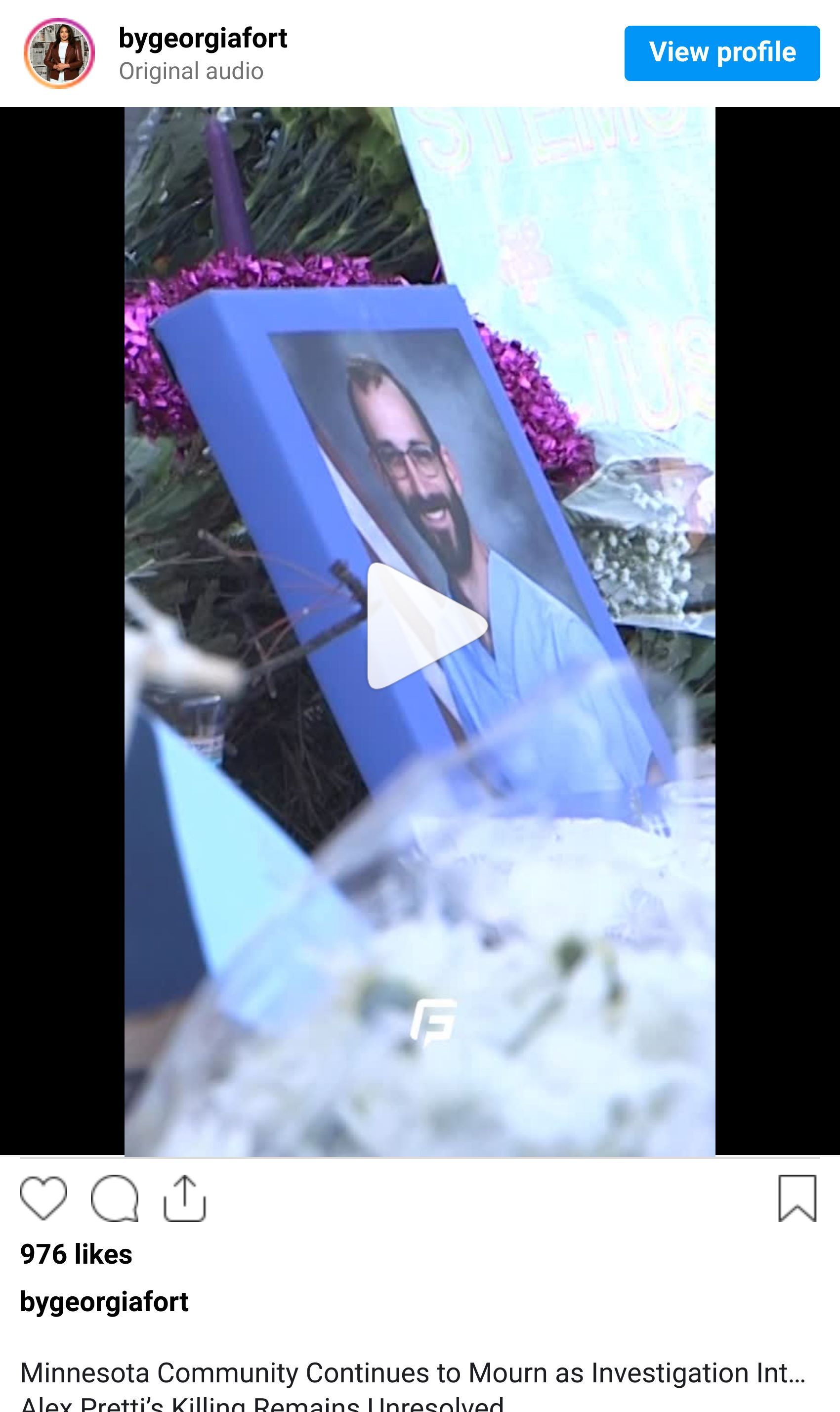
There's Georgia Fort, the three-time Emmy-winning journalist who owns Power 104.7 FM and runs the nonprofit Center for Broadcast Journalism. She was at the crime scene after Renée Good was shot and saw something the national media didn't report: Minneapolis Police and Hennepin County Sheriffs extending the crime scene perimeter so federal agents could exit safely.
"National media helicopters in and then they leave," Fort told Black Enterprise last week in an interview well worth your time. "They don't have the context, the depth, or the relationships. Independent journalists usually have the trust of the community and can get a more raw perspective."
Fort was one of only two journalists in the courtroom when Derek Chauvin was sentenced. She knows Minneapolis. She understands the historical resonance. And she's still there after the viral moment passes, asking: "The mayor says, 'Get the F out,' and it goes viral. But then what is the policy action? What's the follow-up?"
Also on the list:
Sahan Journal, founded by Mukhtar Ibrahim specifically to cover Minnesota's immigrant communities. Their reporters have sourcing advantages in Somali, Hmong, Latino, and East African populations that legacy outlets simply can't replicate.
Mercado Media doing real-time documentation of ICE sightings.
Unicorn Riot providing on-the-ground video with characteristic directness about what they're seeing.
King Demetrius Pendleton captures what's happening on Instagram and TikTok – platform-native coverage that gets picked up by larger outlets.
The discovery problem
Here's what it took for us – connected journalists who are pretty fluent in platform dynamics – to identify these 50+ voices: hours of outreach to people who actually live in Minnesota, searches across platforms, following thread after thread, distinguishing journalists from activists from documenters from amplifiers. Sorting signal from noise. Figuring out who's actually from Minneapolis versus who flew in for the moment. Who has the relationships versus who's aggregating others' work vs. who has expert-level immigration policy chops. Figuring out who's still going to be there next month.
The noise matters – it's how signals spread. But if you're trying to understand what's actually happening in Minneapolis, you need the signal – the trusted, credible, primary sources. You need to know these voices exist and you need a way to find them.
This is exactly what The Independent Journalism Atlas is built to solve and why instead of sharing all 50 names with you, we’re just sharing eight. Eight journalism sources who are more signal than noise.
When the next enforcement surge happens elsewhere – and it will – in Phoenix or Houston or Atlanta or Portland, the same questions will emerge: Who are the Sahan Journals of that community? Who are the Georgia Forts? Who has the trust, the sourcing, the staying power? Who's actually from there?
Right now, that discovery process is manual, fragmented, and exhausting. Audiences (and I mean you and me and our families and friends) are searching across platforms, following breadcrumbs, hoping we haven't missed the most important voice and often just letting the algorithm do the work of deciding our media diet. By the time national media arrives, the story's already been unfolding for days or weeks, documented by people who won't make it into the evening news roundup.
Why this matters now
The Minnesota coverage demonstrates something fundamental about how journalism works in 2026. Community-rooted independent journalists aren't just filling gaps left by legacy media contraction. They're providing coverage that institutional media literally cannot replicate – because trust is earned over years, because access depends on relationships, because some communities will talk to independent journalists but not to outlets they perceive as extensions of power structures.
There's a symbiosis here. Community documenters feed footage to outlets like Sahan Journal and Unicorn Riot. Their reporting gets amplified by national immigration reporters. Legal explainers cite and contextualize the journalism. Legacy outlets pick up stories and sourcing that originated in this independent ecosystem.
Breaking news can create what we call "leapfrog moments" for independent journalism discoverability and infrastructure. When a major story breaks, it exposes both the power of the independent ecosystem and the gaps in how we support it. Minnesota is a proof point. The coverage exists. The journalism is there. What's missing is the connective tissue and the vetting – the way to find them, understand them, support them; to know who is producing credible journalism and amplify them when the story breaks. So the signal can break through the noise even more swiftly to land with the audiences that are trying to find it through the algorithmic fog.
That's what The Independent Journalism Atlas is building. Not just a database, but a living map of who's covering what, where they are, what their beat is, what makes them credible. So the next time a story breaks, we're not starting from scratch. We're not spending hours hunting across platforms. We're not accidentally platforming fly-by aggregators instead of the people who've been there all along.
The Independent Journalism Atlas launches soon. If you're covering a community, issue, or beat that deserves more attention – or if you know someone who is – email us at [email protected].
8 accounts to follow in Minneapolis:
Georgia Fort - Emmy-winning independent journalist and owner of Power 104.7 FM who provides on-the-ground coverage with deep community trust built over years of reporting on civil rights and police accountability in the Twin Cities.
Unicorn Riot - Nonprofit collective providing direct video documentation of protests and enforcement actions, known for livestreaming and capturing footage that often gets picked up by larger outlets.
Sahan Journal - The only Minnesota outlet with sustained, deep relationships in the state's immigrant communities—particularly Somali, Hmong, Latino, and East African populations—founded by Mukhtar Ibrahim to fill critical coverage gaps.
Mercado Media - Independent video journalist providing real-time documentation of ICE sightings, enforcement actions, and community responses across the Twin Cities with hyperlocal, street-level coverage.
Beyondbeurreblanc - Instagram foodie/documenter capturing real-time moments and community perspectives from Minneapolis streets as events unfold.
Sabocat - Educator providing frontline coverage of Minnesota developments with a focus on how enforcement actions impact daily life.
MN Ice Watch - Community alert system tracking ICE movements and enforcement patterns across Minnesota, functioning as an early warning network for immigrant communities.
King Demetrius Pendleton - Hyperlocal video documenter capturing what's happening in specific Minneapolis neighborhoods in real-time, with footage that frequently gets amplified by larger media outlets.
Thank you to Minneapolis resident Kaila White for contributing to our list.
What’s coming up at Project C!

Each month, we bring members of the Project C Community at least one, but usually more, live events. Here’s what’s coming up:
🚀 Friday, Feb 6 | Fundraising Series, Part 2: Making the Ask - Join Marcia Parker and Nick Swyter of the New York Times' Philanthropic Partnerships team for an introduction to philanthropic funding and sponsors. This time, they’ll speak directly to pitches and proposals. | MEMBERS ONLY!
🚀 Monday, Feb 9 | Writing for Transparency & Trust - Television Critics Association president (and independent journalist) Andy Dehnert leads a workshop to help you to use more transparent, human language without sacrificing fairness.| MEMBERS ONLY!
🚀 Friday, Feb 27 | Fundraising Series, Part 3: Managing A Grant-Funded Project - Join Marcia Parker and Nick Swyter of the New York Times' Philanthropic Partnerships team for an introduction to philanthropic funding and sponsors. This time, we’ll concentrate on what happens after you get the grant. | MEMBERS ONLY!
To get access to these events and the Project C Slack community, join here!
Join the Project C Community!
If you’re ready to go deeper and connect with 130+ other creator-model journalists building their own stand-alone ventures, $39/month gets you into the growing Project C Slack community, access to our best resources and exclusive invites to monthly members-only events.
