
Hi there,
Can Legos and burp sound effects get more people to watch a climate explainer than straight-up reporting? The Associated Press is betting they can, and it's paying creators like Fork Ranger and Climate Diva to find out.

For about two years, AP's climate team, led by climate and environment editor Peter Prengaman, has been making vertical video in-house with its "climate choices" format. Earlier this year, the team started a proof-of-concept program that pays outside creators to make videos that are co-posted on AP's channels and the creators' own. Prengaman calls climate "the most important topic in the world that most readers would rather avoid," and he thinks some creators are telling its best stories.
Here at Project C, "How do we work with creators?" is one of the questions I get most from publishers and editors. I've written about MLK50’s Creator in Residence program, which brought one creator inside their newsroom. AP's model is looser: a rotating group of creators, hired piece by piece, who keep their own voice and their own channels.
I talked with Prengaman and Kathy Young, AP's Global Beats video editor, about how the program works, what they're still figuring out, and what they'd tell other newsrooms (and creators) thinking about trying it. Our conversation has been edited for length and clarity.

How did this get started?
Peter: For the last couple of years, AP, and specifically the climate team, has been in the space of vertical video, trying to tell stories where you have one person on camera who's inviting the viewer to go on a journey with them. The cuts are fast and really made for social media, for people who are on the go and looking at their phone, and in many ways younger people looking for that kind of fast content. Kathy and I have been working on what we call Climate Choices, where people on our team tell climate and environment stories from the standpoint of inviting the viewer on this journey: Think about this. Do you want to buy this? If you want to save in this way, here's what to think about.
Where content creators come in, for me, is that I think content creators in climate are telling some of the best stories in climate. And telling stories in climate is not easy. I think of it as the most important topic in the world that most readers would rather avoid. It just is. And some content creators are very successful in getting people to engage. We're already working in vertical video and the social space, and some of these guys are terrific storytellers. How can we learn from them? How can we introduce their viewers to AP, and vice versa? That's the genesis of how we started this.
Kathy: What's great about content creators is each one comes with their own style, their own identity, their own way of storytelling. And they do reach different audiences than perhaps the AP audience. So it's a good way to intersect our audiences and showcase the strengths of each side. It really is a way to grow a greater audience to engage in climate stories.
What are creators doing that journalists aren't?
Peter: I think most of the things they do, journalists could also do, but don't necessarily think about doing it that way. We're working with a content creator named Fork Ranger. His name is Frank [Holleman]. He's a guy in the Netherlands who is really focused on sustainable food: eating less meat, regenerative agriculture. One way he tells stories that I like is with Legos, in kind of stop motion. There's nothing to keep journalists from doing that. It's just the style he uses, and I think it resonates.
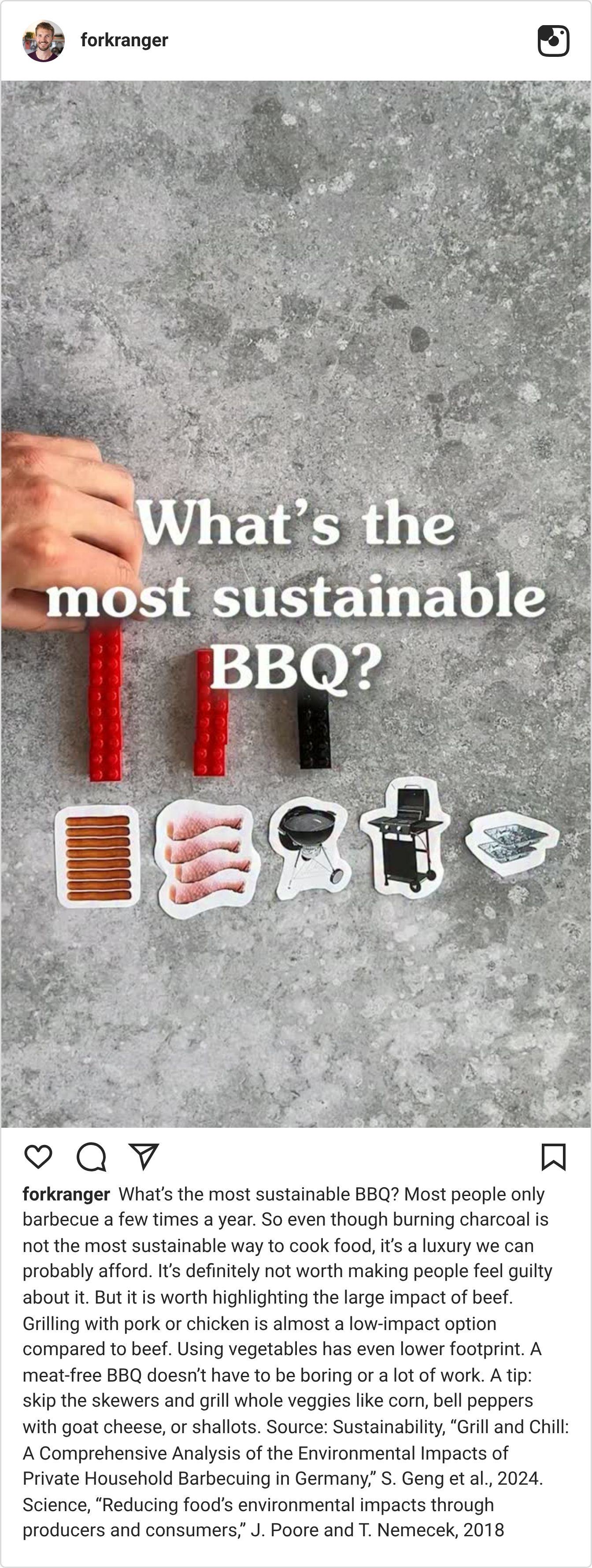
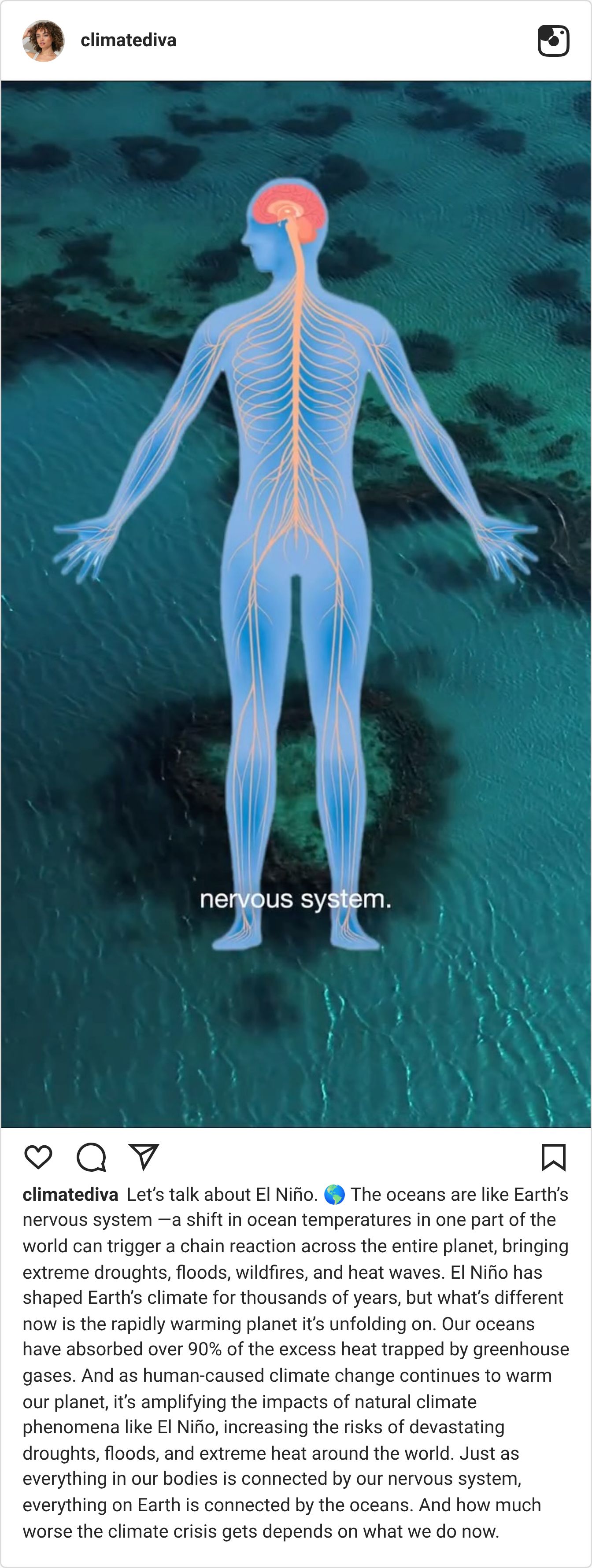
Where journalists can't necessarily emulate them is the personalities. The personalities of content creators are really distinct, and that you can't copy, whether you're a journalist or not. Content creators can also have a wider range of content that brings in a bigger tent. The other person we've worked with so far is Climate Diva. Her name is Summer [Dean]. If you watch her videos, one might be on climate, another may be on food, another may be on fashion. She just lets her curiosity go, and she has a very compelling way of narrating. That helps bring people in, because she's pulling in different people who have different interests. And then they're all her followers.
When this went from an idea to a real project, who had to say yes?
Peter: Who didn't we have to ask? Kathy and I have the same boss. I'm the climate and environment editor, and she's the Global Beats video editor, and our boss oversees all the Global Beats. He was the first one we got buy-in from, and he would have gotten that from his bosses. Then we had to get buy-in from standards, since the folks we work with have a standards review. We have to get them into our financial system. Then, even down to the last minute, the people on the video desk who are the final ones pushing the button have to understand what we're doing.
AP has done creator collaborations elsewhere where no money changed hands. Why did you decide to pay creators?
Peter: I should note we are also in the experimentation phase in compensation, as well. Kathy and I decided we were going to hire these folks as freelancers. There was some discussion about that, because AP has done collaborations in other parts of the newsroom with content creators, and the initial thought was there shouldn't be an exchange of money: we give them AP assets to use, we stream their content on our channels, and that's the exchange.
Kathy: The way we engage and work with the creators is very similar to the way we work with our video freelancers and producers in the field.
Peter: This is real work. I've talked to probably 50 creators in person in the last couple of years. This is a full-time job. To do this at a really high level, this is a complete job.
"This is real work. ... To do this at a really high level, this is a complete job."
When you're scrolling and watching a creator's work, what makes someone jump out?
Peter: I've been the climate editor for five years, and before that I'd done quite a bit of climate and environment work, as an editor and as a field journalist. So this is a topic I really know well. What really jumps out is when somebody explains something in a way I haven't thought of, or in a way that's creative and kind of pops off the screen. It's nontraditional. It's unexpected. It's using Legos or describing El Niño in a very different way. I know what's behind this, so I know if you're right or wrong in the way you're characterizing it. And then the question is, is this interesting? If it is, other people will be interested. And this is a way into the climate story that I, a traditional journalist, haven't thought about.
Kathy: Climate is a global story. Everyone is affected by climate change. We're looking at folks in different parts of the world, with diverse backgrounds and different ways climate is affecting them personally. So I'm looking at how it's affecting them, how they're telling that story, and how that might reach a wider range of audience. Diversity is something I'm really interested in, whether it's geographic, cultural, age. It is a story for everybody.
Once you've found someone, what's the vetting process?
Peter: There are a couple of steps, and they can happen one after the other or all at the same time. I don't know if we have a perfect way yet. Somebody we like has to be put forward for a standards review. There's a separate person in digital video who goes through a lot of their work and sees if anything gets flagged. If they pass, we have a green light. The next step is seeing if they want to work together. Starting with "Do you want to work together?" is better in some ways, because if they don't, you don't waste anybody's time. Then the next step is getting them into AP's financial system and agreeing on a price, a story and a scope of work, and then going from there just like any story with a freelancer.
It's a lot of steps, and a couple of the ones where we've gone far down the road haven't worked out. One pulled out. We had everything, and he just decided he didn't want to do it anymore. We wanted him to get a comment from the agency his story was talking about, and he just disappeared. They are different from freelancers or other journalists in that they just do their own thing. They're busy.
A lot of climate creators have a strong point of view. Where's the line for you?
Kathy: That's a tough question. We're in our proof-of-concept phase, and we're still trying to figure that out. AP is very proud of its standards, and there are some non-negotiables. If there's a strong opinion swayed a certain way, that's not someone we're looking to collaborate with at the moment. Our standards are widely known. They're on our website. If creators don't meet AP standards, at the moment we don't collaborate with them.
Peter: The question is how far can you go. If a creator is bashing Trump or overtly political, that's a no. But what if a creator, in one of their posts, tells people they should buy this product? Do we say, if you were a journalist at AP, you couldn't work here, but in the pieces you do for us, you won't say those things? Where to find that line is something we really have to define better.
Who owns the work? Can creators post it on their own platforms?
Peter: It's shared. That's how we've done it: co-posting. And this is something we're going to do more of: we want them to use AP assets for the stuff they're doing for us. Some of the headaches we've had have been, oh, you used that picture from wherever. That might be fine on your own Instagram, but because you're doing this with AP, that exposes us. We could get sued. In general it's shared, but I don't think it's really defined in the contract we have for how long it's shared. If two years from now somebody wants to do something with content they made with AP, can they? That's a good question. We should figure that out.
Kathy: The collaboration shows the two names. We don't have an AP logo on our social video in general.
How's it going so far? How are you measuring success?
Kathy: We're currently trying to figure out, as we all are around AP, our metrics and our benchmarks for success. The first few we've done did get pretty large numbers in terms of views. We're also looking at whether we're getting new followers on the back end, shares and comments. They've done very well, but we don't have enough yet to give firm benchmarks. Maybe one went out on a day with huge breaking news and people weren't engaging as much as they normally would. There are so many factors.
Peter: From my side, it's experimenting, seeing where things go, and understanding this space more. That's hard to put a number on. I don't know the business model long term. What I really believe is that news organizations need to be in this space and really understand it. It's not just the future. It's the present of where so many people get their news. I look to my teenage sons as my guide. They're 15 and 16, and they know the news. The 15-year-old knows everything that's happening, and he doesn't spend a minute on any traditional websites. This is a world we have to understand as news organizations.
Is this spreading beyond the climate team?
Kathy: I do think it's a space we're all looking to explore outside the climate team. What's great about what we're doing is that we're experimenting with different ways, assessing what works and what we could improve, even standard things like what our editorial guidance is going to be. The idea is to almost come up with a rubric for ways we can work across AP. So I can see it expanding. But we're still at the beginning.
Peter, where do you want to take it next?
Peter: I'd really like it to eventually mean 10 to 20 different creators we work with in different capacities, publishing something one of them does at least once a week. People come and go. Maybe you do three with one person, then nothing for a while, then they come back. A wide rotation. Then experimenting with different ways to use them. Up to now, Kathy and I have basically said: come to us with ideas, and we vet those ideas and work with you on your script. That's all good. But there's one creator who, once we get them through standards review, I'd like to go and say: Here's what I think are the 10 most positive climate stories of 2026. Here are the assets. How would you tell these stories? Maybe that brings people back to the original stories, or just makes more people aware of the great climate stuff AP is doing.
What advice would you give an editor at another newsroom who wants to try this next month?
Peter: Have a lot of conversations beforehand about what you're trying to do. You don't want to surprise people with something like this, because there are pockets of resistance, even at AP. Kathy and I have a very forward-looking boss who's really supportive of trying different things. But if we tried to do this without more buy-in, we would hit so many roadblocks. Don't think of this as something you can just try under the radar. You really have to talk about it.
Kathy: Be open to trying different things. Be open to the different styles of the collaborators, and figure out what's resonating with audiences. I don't want to say the word fail, but be open to seeing what works and tweaking if needed. And be patient.
And the reverse: what should a creator know before pitching a news organization?
Peter: What's attractive is when creators really put forward ideas of things they want to do. Also, know yourself and the content you produce. There are some excellent creators out there who are probably never going to work with a news organization because they're just so edgy. So really know your work, and know a little about what news organizations can and can't do. I don't want anybody to self-censor, but don't waste a lot of your time if you're somebody who likes to rail about politics in all your posts. We're not going to be the right partner for you.
Anything else editors or creators should know?
Peter: Kathy said patience, and I'd build on that. As you go down this road, you realize there's so much you don't know, just basics, like how you go back and forth with a creator on a script, or how you set deadlines for people who work in different ways. If it were up to me, we'd have 10 more creators in the stable already. But it's slow. It's hard going. I have to be patient.
More reading/listening:
🔥 THE LATEST THINGS
Journalists are building talk shows on YouTube. Do their skills translate? Kyle Chayka looks at Max Fisher's "The Bigger Picture," Joanna Stern's "New Things," Kyle Buchanan leaving the Times for "The Kyle Buchanan Show" and Kevin Roose leaving the Times to co-host "Machine Gods" with Casey Newton. He's skeptical that riffing is winning out over reporting. The New Yorker ($)
Mailchimp is being sold to Bending Spoons for $3.68 billion, about a third of what Intuit paid in 2021. Bending Spoons also owns Vimeo, which cut most of its staff in January. CNBC
YouTube now counts the whole couch. As of Nov. 16, it estimates how many people are watching together on a TV and adds them to public view counts. YouTube says it doesn't change Partner Program earnings. Bigger numbers look nice on a sponsor pitch; just know what's behind them. Press Publish
What Shorts actually pay. One food creator says YouTube Shorts earn him $100–150 per million views, and that 200,000 long-form views paid about the same as 30 million Shorts. 😬 Press Publish
Your video archive may be worth more than you think. Creators are licensing old YouTube videos to Tubi, Roku, Samsung TV Plus, Spotify and Facebook. One true-crime creator made $154,000 that way in September, more than 1.8 times their YouTube ad earnings that month. Digiday ($)
The Bulwark signs with Vox Media, which will sell ads across its podcasts, video, newsletters and events. It's another big independent choosing an institutional ad-sales partner rather than building its own sales team. Axios
Europe's media law can't tell a news creator from an influencer. That matters in places like Turkey, where many of the most-watched creators are journalists pushed out of captured newsrooms. Voxeurop
Creator journalists still face the sharpest press-freedom risks. Carlitos Ricardo Parias, the L.A. community journalist known as Richard LA, remains behind bars, CJR notes. His criminal case was dismissed, but his immigration case continues. CJR
TikTok is courting long-form creators with up to $30,000 if they have 10,000 followers on another platform and bring short-form work over. Read the fine print before you sign up. Press Publish
Legacy media keeps coming to creators. Hearst launched Creator Studios, pairing creators with its magazine brands. WSLS 10 in Roanoke is hiring a "Community Creator," and MarketWatch wants a social video journalist who's "part creator." Hearst · WSLS · Talking Biz News
Colleges are building creator programs. ASU and Emerson now offer content-creation degrees, Syracuse has a creator-economy minor that's mostly business courses, and Howard just named Kickstarter CEO Everette Taylor to an endowed chair. J-schools, take note (more to come in a longer essay here soon). Creator Spotlight · Howard
Platform notes: beehiiv turned five and says creators have earned $75 million+ on the platform, plus a new Cloudflare partnership that lets you control which AI bots can crawl your work. Substack also added more ways to customize how your publication looks. Big Desk Energy · Substack
🤗 FROM THE PROJECT C COMMUNITY
Bryan M. Vance passed 10,000 newsletter subscribers! KPTV also profiled his grocery-price tracking, and a local TV VP reached out about making him a regular contributor. Watch 🎉
Julie Rose passed 1,000 subscribers to Provo Notes, up 31% in two weeks, after posting a direct "help me get there" appeal. It turns out plenty of people who told her they loved the newsletter weren't actually subscribed. Her takeaway: "I need to do a lot more asking a lot more often." 🔥
Ulrike Langer's News Machines passed 2,000 subscribers after a long interview with La Nación, Argentina's largest newspaper, brought in a wave of new readers. Her first 1,000 took 12 months; the second took eight. Subscribe 📈
Maureen Kelleher's newsletter hit 1,000 subscribers, 87 of them paid. 🥳
Matt Brown's Extra Points was the title sponsor of a Division III college football bowl game for the third year! 🏈 Extra Points
James Cave signed a sponsor he's wanted for years and launched The Jiffy's first gift guide and a new affiliate section, "Indulgences," and partnered with his local cidery on its annual (sold-out) calendar. Browse the guide 🍎
Rahim Jessani's Bottom Up held its first paid event, and members are already asking for editions in Austin and Salt Lake City. 👏
Jason Mundok joined a public forum on how Lancaster County, Pa., gets its news, alongside the CEO of the local newspaper, who wants to partner with local creators. Watch (the panel starts around 20:00) 📺
Keren Landman wrote about what SNL got exactly right about caregiving, and it hit home for a lot of us (me included). Read 💛
Joey Scott reported for LA Public Press that the Board of Supervisors may force the L.A. County Sheriff's Department to formally identify its deputy gangs. Read 🔎
Julia Barton annotated a humor podcast monologue for Nieman Storyboard, and on her own newsletter she makes the case for a podcast and a memoir as "one healthy response to VC-fueled media dysfunction." Storyboard · Continuous Wave 🎙️
Zineb Haddaji did her first collaboration with a Yemeni media platform, a video series on Yemen and Africa. She was also picked to represent Djibouti in a project interviewing a journalist from every country. Listen 🌍
And for no reason at all, Matt Kiser put a looping yule log on the WTF Just Happened Today masthead. ¯\_(ツ)_/¯ See it
Welcome to new member Rob Knox, who covers women's basketball on TikTok and teaches sports media relations at Temple. 👋

Members get at least one live event a month (except in December because 🎄), usually more. All times ET.
Tuesday, March 30 · Washington, D.C. · Covering Washington in the Creator Era. Project C and GW's School of Media and Public Affairs are bringing creator journalists to the old Crossfire stage for a full-day summit on how Americans get their political news. Speakers include Aaron Parnas, Chris Cillizza and Julia Angwin. Learn more →
The Project C 100: Nominations are closed, and we're deep in the selection process. More soon. Stay tuned →
🎤 And here's where I'll be:
Jan. 5–7 · Phoenix · ASU's National Journalism + AI Accelerator, hosted by the Knight Center for the Future of News at the Cronkite School.
Feb. 5 · San Diego · On a featured panel, "Modern Reporting in the Age of Social Media," at the ABA Forum on Communications Law. Details →
Ready to build alongside 250+ creator journalists? $39/month gets you the private Slack, members-only events and every replay in the Replay Room. JOIN NOW →

See who's building independent journalism, and where. The Atlas maps 2,500+ verified creator-journalists, organized by beat, platform and geography.

How this newsletter is made: A human (hi, it's Liz 👋) writes, edits and makes every editorial call here. I use Claude, Anthropic's AI assistant, as a research tool — each week it sweeps my sources and assembles the first draft of the links roundup. Every link and every word gets a human read before it reaches you.
