

Imagine a procedural crime drama where the star detective walks into a room that's already been processed. Evidence has been bagged, witnesses interviewed, the smoking gun found. She announces she's cracked it. The other detectives exchange an eye-roll.
That's roughly how it felt to watch the journalism world react this week to a speech by Deborah Turness, the former CEO of BBC News (who resigned last year following questions about the BBC's editing of a Donald Trump interview), in which she declared that the rise of creator journalism is "the most disruptive shift the news industry has seen." The Guardian and Nieman Lab both covered it. LinkedIn did its thing. And people in my world, who have been living inside this shift for years, shared it with something between validation and exhaustion.
To be fair to Turness: she's not wrong about any of this, and she says she made these observations out of genuine love for the BBC and belief in its future, which I'll take at face value. But there's a difference between being right and being timely, and the speech she gave this week describes a disruption that has already happened as though it's a threat on the horizon. It also gets the "what to do now" part wrong.
Gallup's yearly tracking of media trust shows it degrading steadily, with a particularly sharp drop starting in 2020. That's when Americans stopped waiting for traditional news organizations to make sense of the world for them and started finding individual voices they trusted – voices not tied to brands. (That "not tied to brands" part matters for what follows.) Years of "fake news" narratives had already sowed seeds of doubt. Covid, and the simultaneous gutting of local news across the country, finished the job. Audiences were actively looking for somewhere else to put their trust, somewhere that felt separate from institutions. They found it, and they stayed.
That is still happening, but really it’s past tense. It happened.
It shows up in declining subscription numbers, in tanking advertising revenue, in paltry Nielsen ratings that are now too drastic to ignore or explain away as a temporary dip – and in the comment sections of Substacks written by people who used to work at the places now desperately trying to understand where their audience went. It shows up in the vast numbers of people following independent creators on Instagram and YouTube and TikTok and in newsletters. Each of those platforms makes (a lot of) money because they understood what was happening five or six years ago and built the infrastructure while legacy news organizations were still attributing the shift to “news avoidance” and convening task forces about that.
(Dear reader, it wasn’t news avoidance – it was audience migration.)
And it isn't just the audience that lost trust in legacy news brands. When I did my Sulzberger fellowship in 2024, prior to launching Project C, I talked to dozens of journalists who were thinking about going independent. Yes, they cited job security concerns. But they also talked about losing faith in the people in the corner offices. I talked to videographers being told to produce content that aligned more with advertiser needs than editorial mission, or writers being told to stop doing mission-driven work because it wasn't sellable. In the weeks after 300 journalists were laid off from The Washington Post, a significant number of them launched newsletters. That's not a trend. That's people and audiences moving in the same direction at the same time.
The Project C Community of journalists who left or got pushed out of traditional newsrooms and built independent practices now has 220 members (and grows every month) while The Independent Journalism Atlas now tracks 1,453 independent news creators (and growing, too). Not because we’re just so dang fun (though we are), but because the alternative stopped working for them and they needed to find a new way to keep doing the work they love.
Which brings me to who Turness says she spent "the last several months" talking to in order to reach her conclusions. Platform executives. Talent agents. High-profile broadcast journalists who made the leap to independence with existing audiences and name recognition already intact. That's a perfectly reasonable group if your question is "where did the money go?" It's a much less useful group if your question is "why did audiences stop trusting us, and what would bring them back?" Those are different questions, and the source list reveals which one is actually being asked.
Hamish McKenzie, the co-founder of Substack, is among the people she cites. He could have told her this in 2022. (He probably did tell anyone who asked.) He has a financial stake in creator journalism succeeding – which doesn't make him wrong, but it does mean his perspective on whether legacy news organizations should "liberate their talent and let journalists act more like creators" is not exactly disinterested.
That is exactly what many newsrooms are actively trying. But it misreads what creator journalism actually is. The audience didn't leave The Washington Post or CNN because the journalists weren't relatable enough. They left because they distrusted the institutions, and they were actively looking for somewhere else to put that trust – somewhere that felt separate from the brands. The trust they found was built through a direct relationship over time, through consistency, and the sense that the person on the other end of the newsletter or podcast actually gave a damn about the specific thing they were covering. Audiences are no longer looking for a one-size-fits-all news source or a brand’s stamp of approval. They want someone covering a very specific niche topic deeply and authentically. You can't replicate that by changing the packaging. The trust has moved. The format is downstream of that.
And for news executives worried about training up in-house talent and then watching them walk out the door and take that audience with them: yeah, that's probably going to happen. Joanna Stern left the Wall Street Journal earlier this year after 12 years to launch her own consumer tech media company. NBC News subsequently signed her as a contributor. Notice the direction of that transaction. She didn't go looking for an institution to validate her. The institution came to her, because she'd built something worth paying for. The journalists who are best at building direct audience relationships are going to figure out that the optimal place to do that is independently – not inside a brand the audience has already decided it doesn't trust. The smarter move for news executives is to figure out what a relationship with an independent journalist is actually worth, and build a model around that.
The real case for big newsrooms (it exists)
Here's where traditional news organizations can actually win: doing the things that genuinely require scale:
Enterprise investigative work that takes a team of 30 and 18 months to publish.
Simultaneous FOIA requests across 50 states.
The legal infrastructure to sit on a story while lawyers review it, to defend a reporter in court, to publish something that will survive a defamation lawsuit.
Sending a correspondent into a war zone with security support and an actual evacuation plan.
The coordinated document analysis that required 80 newsrooms across 40 countries to crack the Panama Papers.
That is the value proposition. Not "our journalists can now post on TikTok."
The things that require capital and sustained coordinated effort – that's what large newsrooms can do that a creator with a great Substack will struggle to do effectively. And crucially, that's where trust gets rebuilt, slowly, through the work itself.
Over the past several years, media organizations have scaled back their newsrooms, and in some cases gone out of business entirely. That scaling back almost always starts with newsroom jobs. The industry has already shed thousands of positions: more than 3,400 in 2025 alone, with 2026 on pace to be worse. I thought cutting the newsroom was the wrong move a decade ago watching it happen at Gannett, and I still think so. We were cutting the very thing that was actually valuable to the end user. The journalists who lost those jobs didn't disappear. A lot of them figured out that they could build something on their own, and they were doing it at exactly the right moment: the audience had already migrated and the platforms were already waiting for them. The shift had already happened by the time anyone in a corner office started calling it one.
News execs, here’s a freebie: think hard about what your organization can do that independent creators cannot. Concentrate your resources there. That's the path back.
What's frustrating about the Turness framing isn't that she got there eventually. It's that even her methodology for getting there reproduces the exact problem she's trying to solve. She went to the top of the food chain to understand why audiences stopped trusting the top of the food chain. The actual story – the one being written right now, by journalists who built something real from scratch without a platform exec's blessing or a talent agent's phone call – didn't make her source list. Which is kind of the whole point.
🔥 the latest things
📌 Your Friendly Neighborhood Newsletter — Kyle Chayka zooms in on the rise of neighborhood-level newsletters and how these labors of love, often with small audiences, are building a strong sense of commuity. 👉 The New Yorker
📌 Democrats try a new creator playbook in California — Tom Steyer’s California gubernatorial campaign has hired news influencer Carlos Eduardo Espina to advise on creator strategy. 👉 WP Creator
📌 Don Lemon's Lemon Media Network crosses 10 million followers — The expansion announcement this week included a new operations director, a new DC correspondent, and the launch of a daily newsletter (Lucky Lemon 7) on Substack. That's a 50% audience increase in a year. 👉 The Wrap
📌 PBS and ITVS launch the Independent Lens Creator Lab — The inaugural six-month cohort includes five creators who will produce up to 12 vertical videos for Independent Lens and PBS social platforms, with up to $36,000 in production funding plus mentorship. The cohort includes Fernando Hurtado of In The Hyphen. 👉 Variety
📌 Writers are fleeing the Substack Tax — Substack's 10% revenue cut is pushing high-profile publishers (The Ankler among them) to Ghost and beehiiv. For a newsletter earning $10K/month, switching to Ghost saves $9,600 a year. 👉 The Verge
📌 Mega creators are finding their personalities don't scale — This piece on the growing pains of the biggest creators trying to build standalone businesses is fascinating. There's something here for creator journalists, too: the audience relationship is an asset, but it can also be a limit. 👉 Digiday
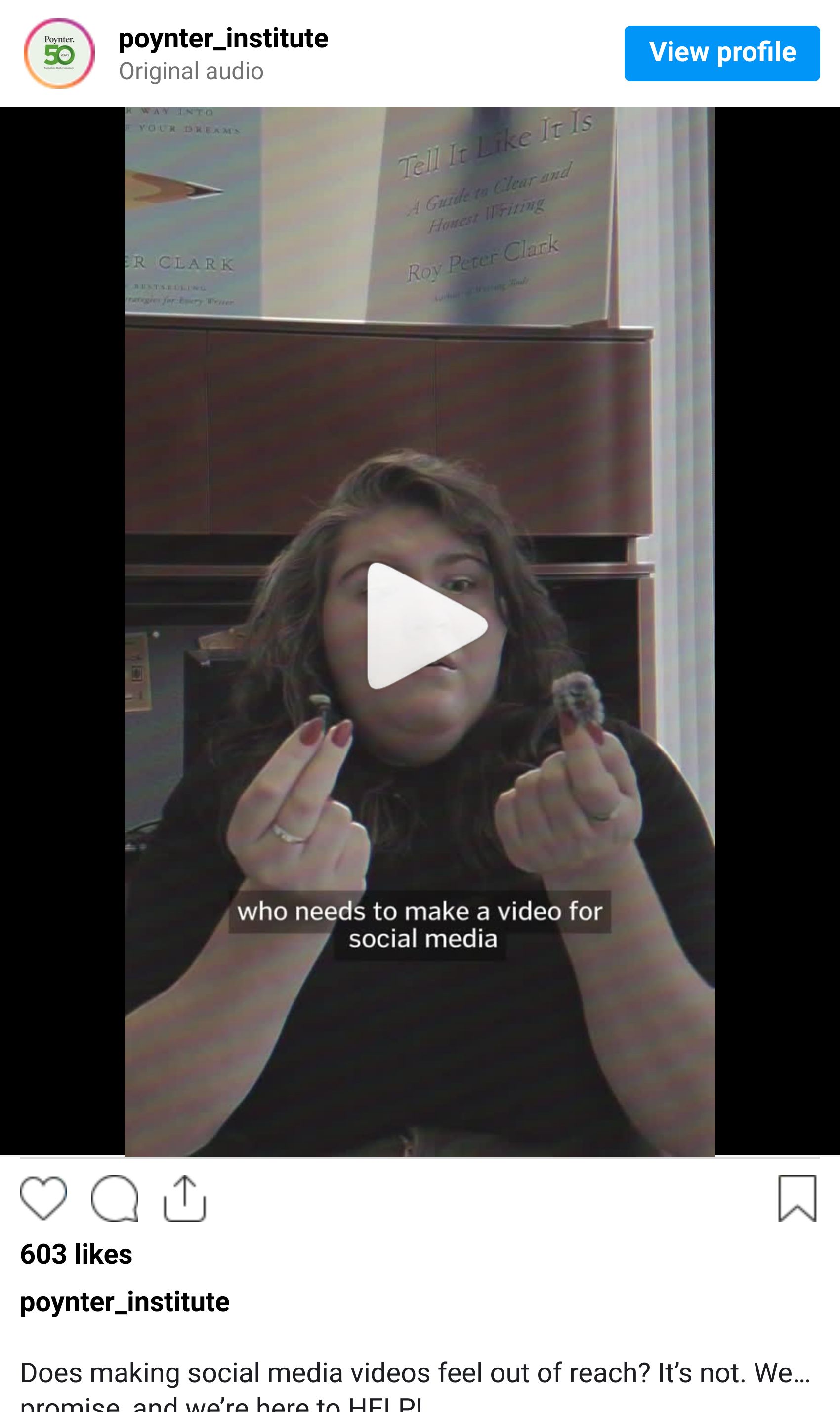
📽 Big fan of this vertical video training promo from Poynter:

📌 Congrats to Seamus Hughes for his Pulitzer win for a project in collaboration with the New York Times! :
Join the Project C Community!
If you’re ready to go deeper and connect with 200+ other creator-model journalists building their own stand-alone ventures, $39/month gets you into the growing Project C Slack community, access to our best resources and exclusive invites to monthly members-only events. JOIN NOW!

